

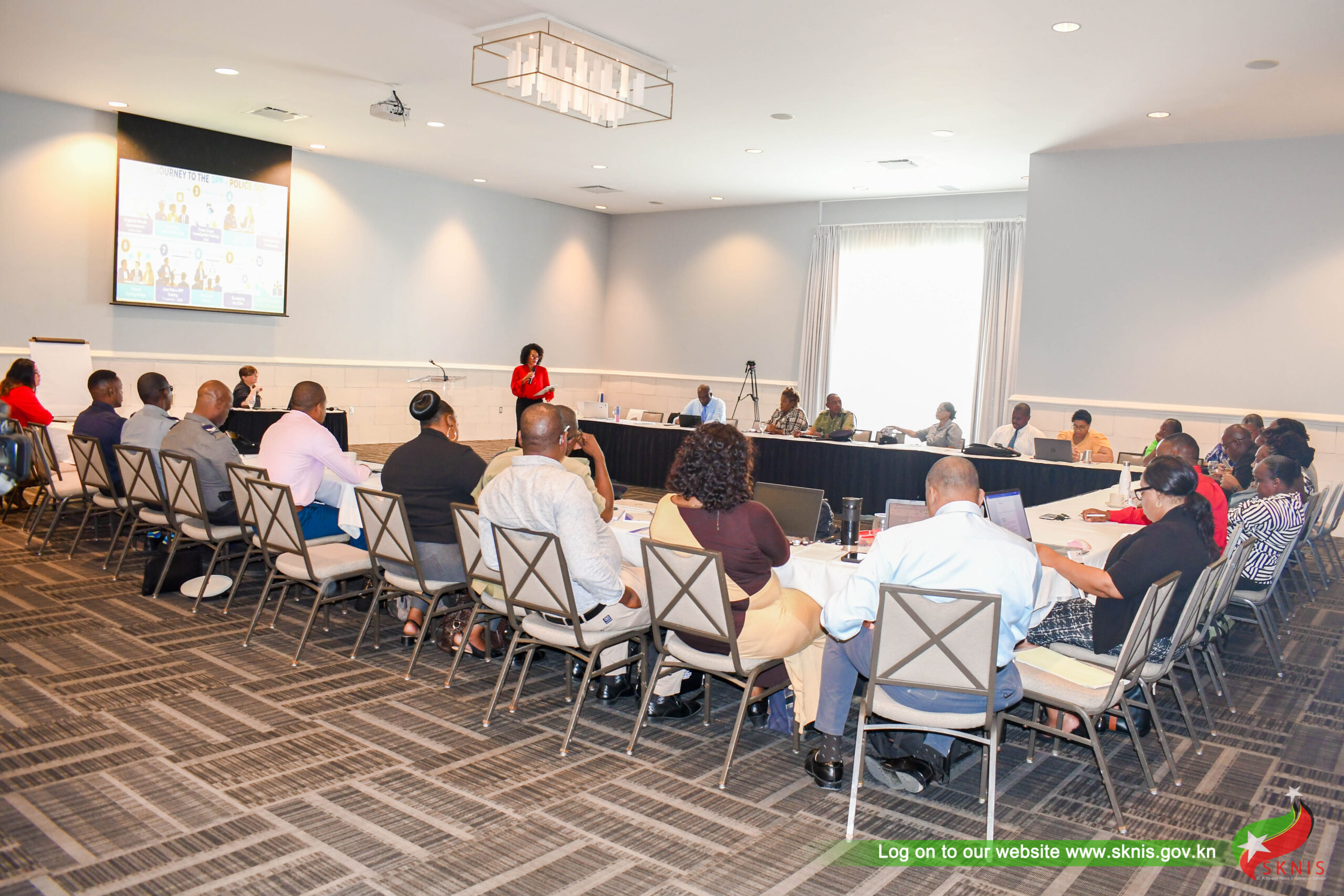
Basseterre, Saint Kitts and Nevis, 27 October 2026: The Ministry of Justice and Legal Affairs, with support from the United Nations Development Programme (UNDP) PACE Justice Project and the United Nations Office on Drugs and Crime (UNODC), is hosting a workshop today at the Royal St. Kitts Hotel, bringing together police officers and prosecutors to review proposed Regional Standard Operating Procedures aimed at strengthening the preparation and progression of criminal cases.
The workshop brings together members of the Royal St. Christopher and Nevis Police Force and the Office of the Director of Public Prosecutions to examine how investigators and prosecutors work together as a case moves from investigation to prosecution and ultimately to court.
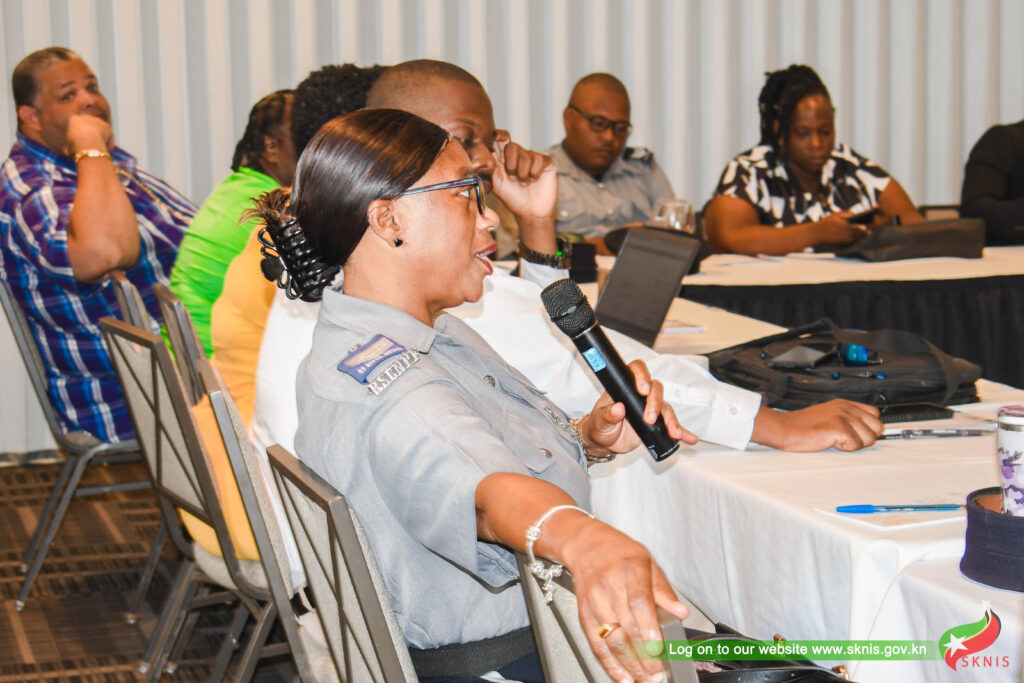
The proposed SOPs were prepared by UNODC, in partnership with UNDP, as part of the European Union funded PACE Justice Programme. They provide a practical framework for cooperation between investigators, police prosecutors and DPP prosecutors, covering early prosecutorial engagement, evidence management and case file preparation, charging review, trial preparation and post-trial follow-up.
The initiative forms part of the Government’s broader justice reform agenda and its recognition that crime and violence cannot be addressed through enforcement alone. Treating crime and violence as a public health issue requires attention to prevention and early intervention, alongside an effective criminal justice response, rehabilitation and reintegration.
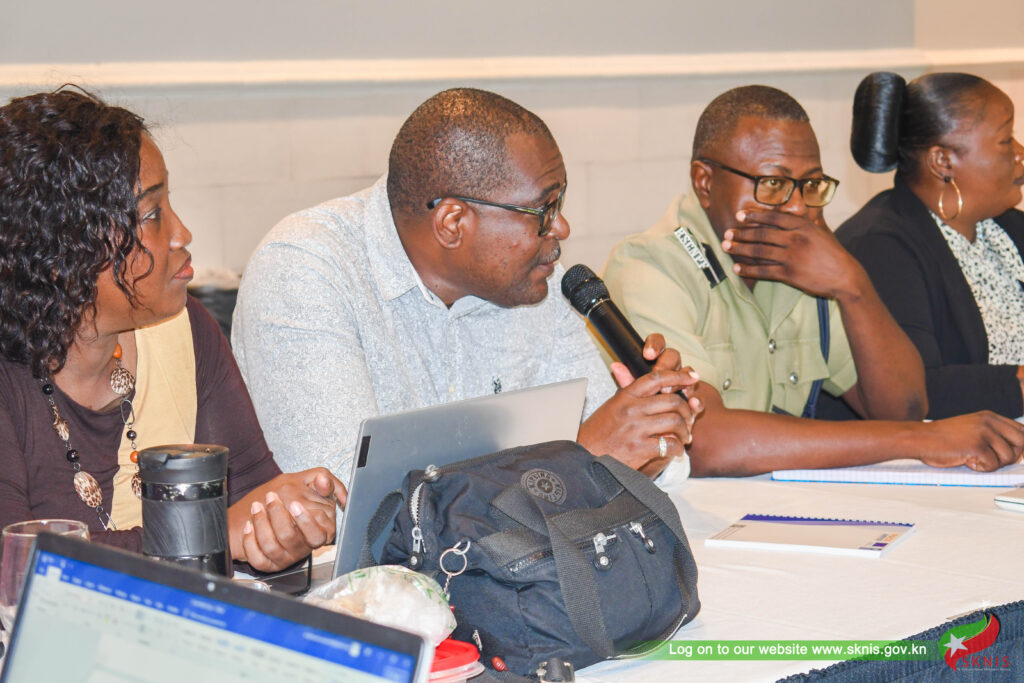
Within that wider approach, the Ministry has been working to strengthen the different stages of the justice process and the connections between them. The present exercise focuses on one of those connections: the relationship between investigation and prosecution, and ensuring that criminal matters move between the Police and the Office of the Director of Public Prosecutions with greater clarity, consistency and efficiency.
Opening the workshop, Attorney General and Minister of Justice and Legal Affairs, the Hon. Garth Wilkin, said effective criminal justice depends not only on the strength of individual institutions, but also on how well the different parts of the system work together. “Anyone who has worked in criminal justice knows a good case can encounter difficulty long before it reaches a courtroom,” Attorney General Wilkin said.
He pointed to practical issues which can arise as cases progress, including further investigative work being identified after a file reaches the prosecutor, evidential issues being detected later than they should be and witness-related difficulties emerging as a matter approaches trial. “These are familiar problems. They cost time, place additional demands on both institutions and can affect the progress of a case,” he said.
The Attorney General emphasised that the proposed procedures do not change the distinct responsibilities of the Police and the DPP’s Office. Rather, they are intended to provide greater clarity and consistency in how the two institutions work together at important stages of a criminal case.
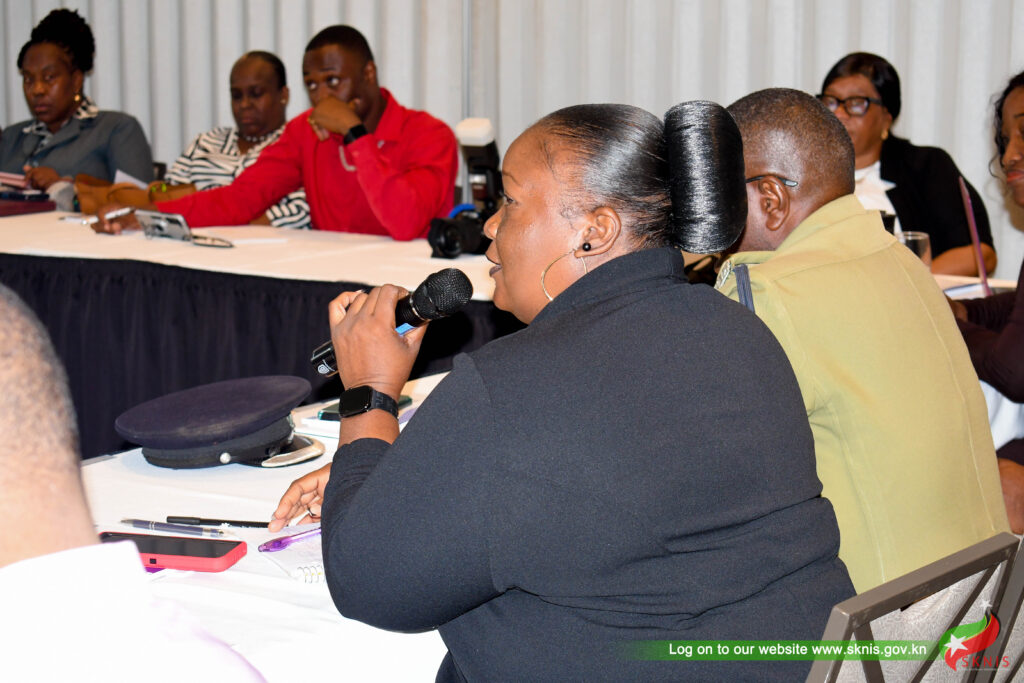
Police officers and prosecutors are examining the proposed procedures against the laws, institutional arrangements and operational realities of Saint Kitts and Nevis, identifying provisions that can be applied nationally, areas requiring adjustment and matters requiring further consideration.
Attorney General Wilkin situated the exercise within the Government’s broader programme of justice reform, which has included legislative reform, strengthened institutional capacity and continued efforts to improve coordination across the justice sector.
For the Ministry, the exercise is intended to translate justice reform into practical improvements in how criminal cases are handled. Stronger coordination between investigators and prosecutors should help to identify issues earlier, improve the quality and readiness of case files and reduce avoidable delays as matters move through the justice system.
The feedback from today’s workshop will inform the next stage of finalising the SOPs for Saint Kitts and Nevis, with continued engagement between the Police, the Office of the Director of Public Prosecutions and the Ministry of Justice and Legal Affairs.
End