

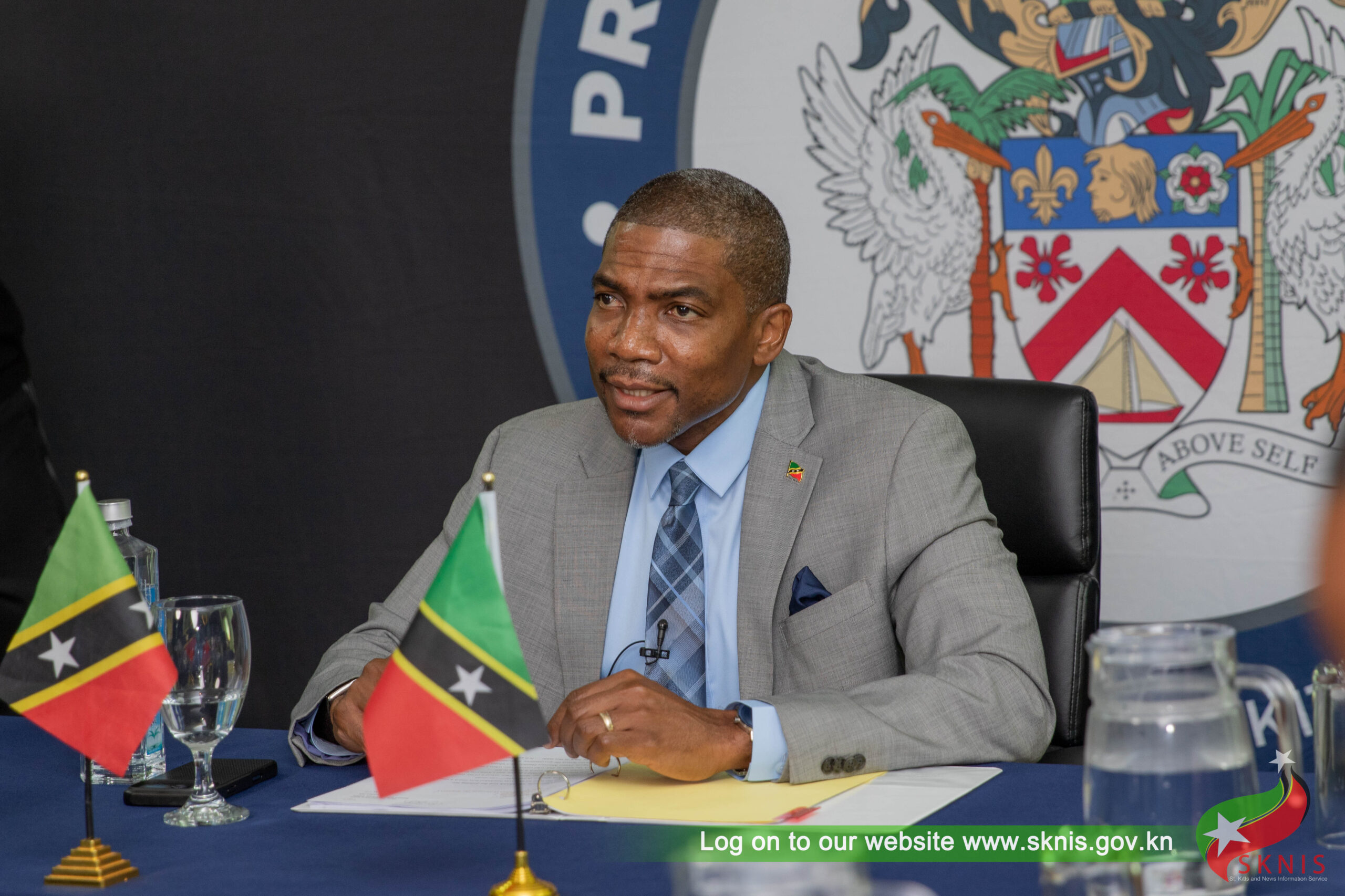
Basseterre, St. Kitts, November 9, 2026 (PMO) – The Government of St. Kitts and Nevis will continue subsidising fuel to ease the impact of higher international prices on households and businesses, Prime Minister Hon. Dr. Terrance Drew said at his Roundtable on November 5. He called for a frank discussion about what drives the price of imported diesel and how the government can cushion the costs that reach consumers at home.
Prime Minister Drew explained that the impact of higher diesel prices extends well beyond the pump. Farmers pay more to run tractors and other equipment, while businesses face higher costs to move goods. Those increases can reach families in the price of food and other essentials. Dr. Drew urged anyone, specifically politicians, promising lower fuel prices to explain how they would deliver those reductions in a country that imports its diesel.
“We have given a lot of subsidy, but you can only give so much. The price of diesel internationally is high, and there’s very little any country can do about it,” Dr. Drew said. “Which politician in St. Kitts and Nevis can carry down the price of diesel internationally?”
The Prime Minister said much of the inflation felt in St. Kitts and Nevis originates abroad. He pointed to conflict in Europe and the Middle East, pressure on shipping routes and higher manufacturing and freight costs. When a supplier charges more for a product or a shipping company charges more to deliver it, he explained, local businesses face higher costs before the goods reach store shelves.
“Manufacturing costs gone up, shipping costs gone up, and the whole world is dealing with an inflation crisis. What does inflation mean? Things gone up,” the Prime Minister said.
Dr. Drew said the government has responded by absorbing part of the cost of essentials and giving up revenue where tax relief can ease pressure on consumers. He pointed to more than EC$80 million in electricity subsidies reported by June 2026. By covering the fuel variation cost, the government has helped limit the impact of higher fuel prices on household electricity bills.
“The government has listened, and we have done a lot to deal with the cost of living crisis,” Prime Minister Drew said.
Earlier in 2026, the government reduced the excise tax on gasoline from EC$1.95 to EC$0.98 per gallon and cut the Customs Service Charge on gasoline from six percent to three percent. The temporary relief package also excluded shipping surcharges from customs tax and duty calculations, reducing the tax cost attached to imported goods. Cabinet extended those measures through September 30.
At The Roundtable, Dr. Drew reaffirmed the government’s commitment to subsidising gasoline, diesel and cooking gas. He expressed that support for cooking gas has helped keep the 20-pound cylinder at EC$30 and the 100-pound cylinder at EC$140, easing a recurring expense for families.
Prime Minister Drew acknowledged that households and businesses continue to face difficult choices as prices rise. He said the government would continue to be frank about the pressures coming from abroad and use the measures available at home to help families manage the cost of keeping the lights on, getting to work and putting food on the table.