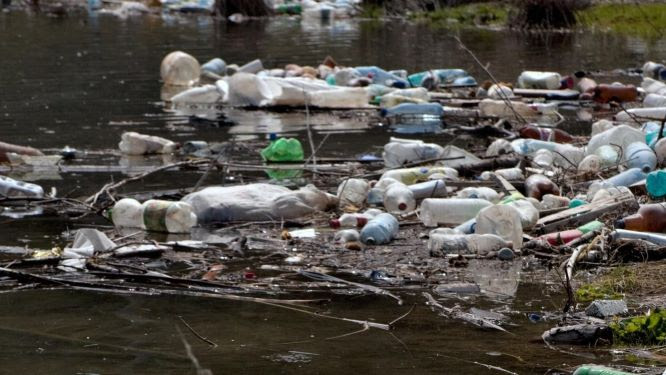
Basseterre, St. Kitts, April 22, 2021 (SKNIS): As part of the Government of St. Kitts and Nevis goal of promoting a ban on single-use plastics within the Federation, the Ministry of Environment is collaborating with multi-sector partners in educating about the dangers of plastics to human and environmental health.
Biosafety Officer within the Ministry of Environment, Vicia Woods, explained the process of the biodegradation of plastics during the ‘Working for You’ programme on April 21, 2021.
“Biodegradation is the break down of plastics. Most of the time you would say that plastics are not biodegradable, but this is not entirely true because it takes such a long time to biodegrade, so for instance up to 100 years, plastics can take to break down, so we say that they won’t break down within our lifetime, so we class it as non-biodegradable.”
“There are now plastics that can break down within a number of years because these plastics are made from cornstarch, sugar cane, and a lot of other things that could replace these chemicals that would cause the plastics to breakdown much more easily than these other toxins that are usually put into the traditional plastics,” she said.
With the plastics from cornstarch and sugar cane, Ms. Woods explicated that “These plastics are broken down by the sun and not only the sun, but the other environmental elements help to break down as well.”
“Once heat gets to plastic, that causes the breakdown process, but traditional plastics won’t break down as easily. When they’re heated, they just release toxins so this breakdown will happen over a long period of time,” said Ms. Woods.
Non-biodegradable plastics pose a danger to human health and the environment. Non-biodegradable plastics often find their way into the ocean and harm seabirds, fish, and other marine life. Additionally, when fish and other marine life consume plastic, it can strangle and suffocate them, and also, they experience digestion problems. Microplastics, tiny bits of polypropylene or polyethylene, hide beneath the water and pose a risk as well.
Also, products that do not decompose naturally remain in landfills and take up space much longer than biodegradable materials. A lot of plastics do not even make it to landfills but into parks, fields, forests, and the sea causing plastic pollution. Styrofoam, also known as foamed polystyrene, is a non-biodegradable substance that can cause environmental problems when it becomes litter. For instance, styrene, a neurotoxin at high doses, can leach out of polystyrene materials when temperatures rise.
-30-
Monday, November 9

Trending
- CHILDREN’S MEDICAL FUND PROVIDES CRITICAL OVERSEAS TREATMENT FOR 152 CHILDREN
- Government Continues to “Take the Lash” of Rising Costs to Ease the Burden on Families, Prime Minister Drew Shares
- “This Is Real Support,” Prime Minister Drew Says as Government Investment in STEP Programme Reaches $54 Million in 2026 Alone
- Prime Minister Drew Flags Possible Financial Blacklisting as Bigger Concern Than Visa-Free Access in CBI Debate
- Government Subsidies Keep St. Kitts and Nevis Cooking Gas Prices Lowest in the ECCU
- GOVERNMENT ABSORBS MILLIONS IN COSTS TO SHIELD CITIZENS FROM ECONOMIC PRESSURES
- Embassy of Saint Kitts and Nevis Thanks Taichung City Government’s Cultural Bureau for Historic Participation in 2026 Taichung Jazz Festival
- “Who Gonna Send Them Home? Not Me,” Prime Minister Drew Says, Dismissing Talk of Ending STEP Program and Calling for a Clear Path to Permanent Jobs